introduction: in the malaysian market, e-commerce holidays often lead to short-term traffic surges. this article focuses on "how to use malaysian cloud servers to achieve elastic expansion under e-commerce holiday traffic". it gives feasible architectural strategies and practical suggestions, taking into account availability, performance and cost control, and is suitable for reference by technical leaders and operation and maintenance teams.
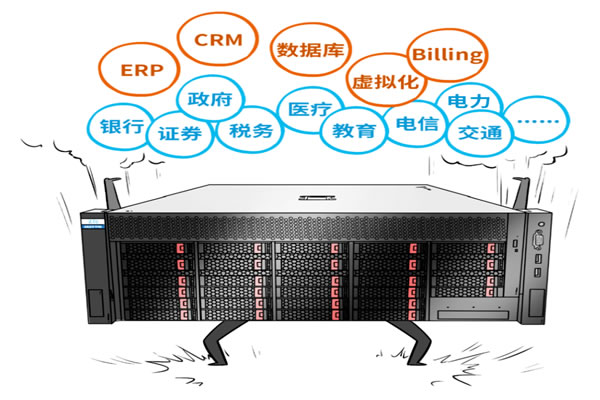
traffic fluctuates greatly during holidays and is unpredictable. without elastic expansion, it will cause slow page response, order failure, or service unavailability. elastic expansion can increase instances and bandwidth in a short time during traffic peaks, reduce pressure on single points, ensure business continuity, and improve conversion rates and user experience.
select an availability zone close to malaysia, configure appropriate vpcs and subnets, preset security groups and network policies, and conduct data sovereignty and compliance audits. conduct capacity baseline testing in advance and prepare images, automated deployment scripts, and configuration management tools to ensure that services can be instantiated quickly during capacity expansion.
make traffic curve predictions based on historical transaction data and promotion calendars, and set automatic scaling strategies based on cpu, response time and number of requests. combined with scheduled scaling, expand capacity in advance during known promotion periods, use predictive scaling to reduce the risk of cold start, and set a cooling time for scaling to avoid frequent jitters.
elastic load balancing is used to distribute requests, and abnormal instances are automatically eliminated based on health checks. cache static resources through cdn and respond at the edge node nearby, reducing the load on the origin site. use ephemeral caching and interface throttling for dynamic requests, and enable session stickiness or externalized session storage if necessary.
separate database reading and writing, and use read-only replicas to share query pressure. implement queuing and retry mechanisms for key write operations to avoid table locks caused by instantaneous write peaks. design the application to be stateless or place sessions in distributed cache and persistent storage to quickly access new instances during horizontal expansion.
monitor key indicators (qps, response time, cpu, memory, number of connections, queue length, etc.) in real time, build alarm rules and define a step-by-step response process. centralized logs facilitate troubleshooting, and combined with distributed tracing to track link performance, stress tests and fault drills are conducted before holidays to verify the effectiveness of monitoring and alarms.
on the premise of ensuring performance, costs are optimized through elastic scaling, combination of on-demand and reserved resources, and traffic scheduling. track expenses using tagging and bill monitoring. follow malaysia's data protection and compliance requirements, clarify user data storage location and access control policies, and avoid compliance risks.
for malaysian e-commerce companies, flexible expansion during holidays is not a single point of technology, but the result of collaboration among architecture, monitoring and operation and maintenance. it is recommended to conduct capacity baselines and stress tests in advance, configure automatic scaling and load balancing, external cache and stateless design, establish and complete monitoring alarms and develop drill plans to ensure stable delivery during peak periods.
- Latest articles
- A Practical Guide Teaches You Common Testing Methods To Verify Whether Hong Kong Server Clusters Are Exclusive
- Contract Considerations: Caution Is Needed When Choosing Ranked Vendors For US Server Rentals
- Best Practices For SMEs Using Cambodia CN2 Return-to-China Servers To Reduce Latency Costs
- Common Troubleshooting Steps And Rapid Recovery Solutions For Taiwan Telecom CN2 Broadband
- An Automated Operations And Maintenance Solution Covering Everything From Development To Monitoring How To Build A Site On Hong Kong Cloud Servers
- From A Business Perspective, Is Vietnam's VPS Reliable? Considerations Regarding Compliance And Data Security
- Free Server Korea Security Protection Policy And Backup Implementation Guide
- Cost And Operation Management Recommendations For Enterprises Deploying Korean CN2 Site Cluster Cloud Servers
- Basic Information On Taiwan Proxy Servers, Common Terminology Explanations, And Purchase Precautions
- How To Choose A Cloud Server In Thailand: From Network Latency To After-sales Service, Comprehensive Aspects
- Popular tags
-

A Detailed Report On Malaysian VPS Service Provider After-sales And Technical Support Testing Which Is More Reliable
This article is a detailed report on which Malaysian VPS service provider after-sales and technical support is more reliable. Based on quantifiable indicators and real test scenarios, it systematically evaluates after-sales response, technical capabilities, localized support, and compliance, and provides recommendations. -

Common Factors And Solutions Affecting Malaysia Vps Access Speed
this article analyzes common factors that affect vps access speed in malaysia, including network links, geographical location, server configuration, storage io, dns/cdn and concurrency strategies, and provides feasible solutions and optimization suggestions. -

How To Choose A Suitable Malaysia Vps Service Provider?
this article introduces how to choose a suitable malaysian vps service provider, including evaluation of performance, support, price, etc.